Bedtime Stories for Kids: What They Are, Why They Matter & How to Make Them Count for Your Child's Development
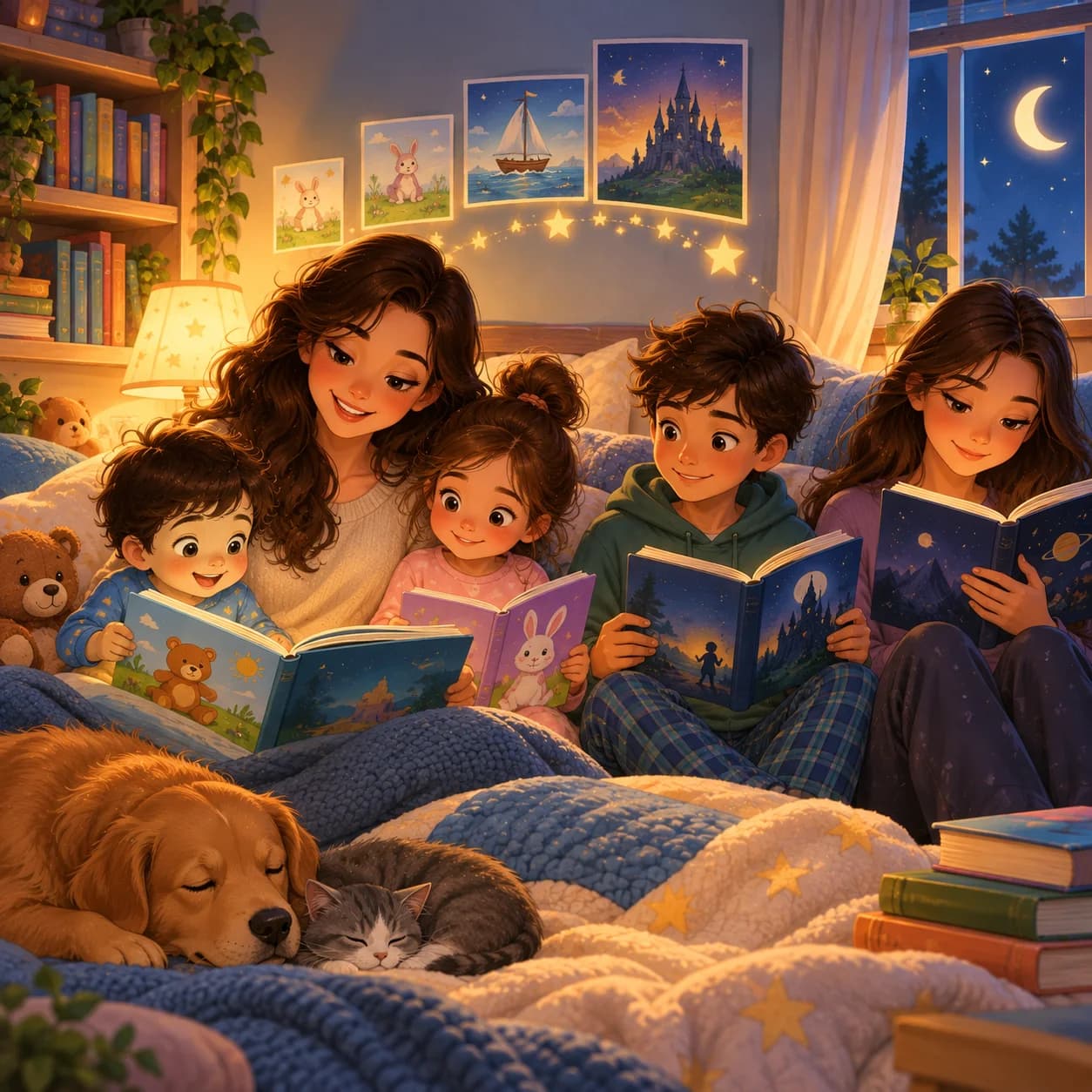
KEY TAKEAWAYS
- A child's story needs change in predictable, observable ways at each age; matching the story to the stage is what keeps a child engaged.
- Toddlers need short, rhythmic, emotionally safe stories; early readers need simple plots and repetition; middle graders need adventure and moral complexity; teens need stories that respect their intelligence and question the world.
- Reading aloud regularly builds vocabulary, comprehension, and emotional bonding, and the benefits continue well past the age a child can read independently.
- Genre, format, and occasion matter as much as age: a holiday story, a poem, or a curious non-fiction book can be the perfect fit when a standard story does not work.
- The single most important habit is consistency. A short, regular reading routine beats an occasional marathon session every time.
The bedtime shelf is full, and your child is waiting. You scan the spines: a board book about a bear, a chapter book about a dragon, a picture book that won an award you have never heard of. One of them fits tonight. You just do not know which one.
Most collections of children stories are organized like warehouses: by title, by author, by format. They tell you what exists, and they miss what fits. A three-year-old and a nine-year-old are not the same reader, but the shelf treats them as if they were.
A father asked me for a bedtime story for his three-year-old, and I handed him a beautiful picture book by a famous author. His daughter was asleep on the floor by page six. That night I stopped recommending by title and started matching by attention span.
This guide is a developmental map. It shows what changes in a child's attention, emotion, and language at each stage, then matches stories to those needs. You will leave knowing exactly where to start tonight: find your child's age, pick one story from that stage, and read it aloud.
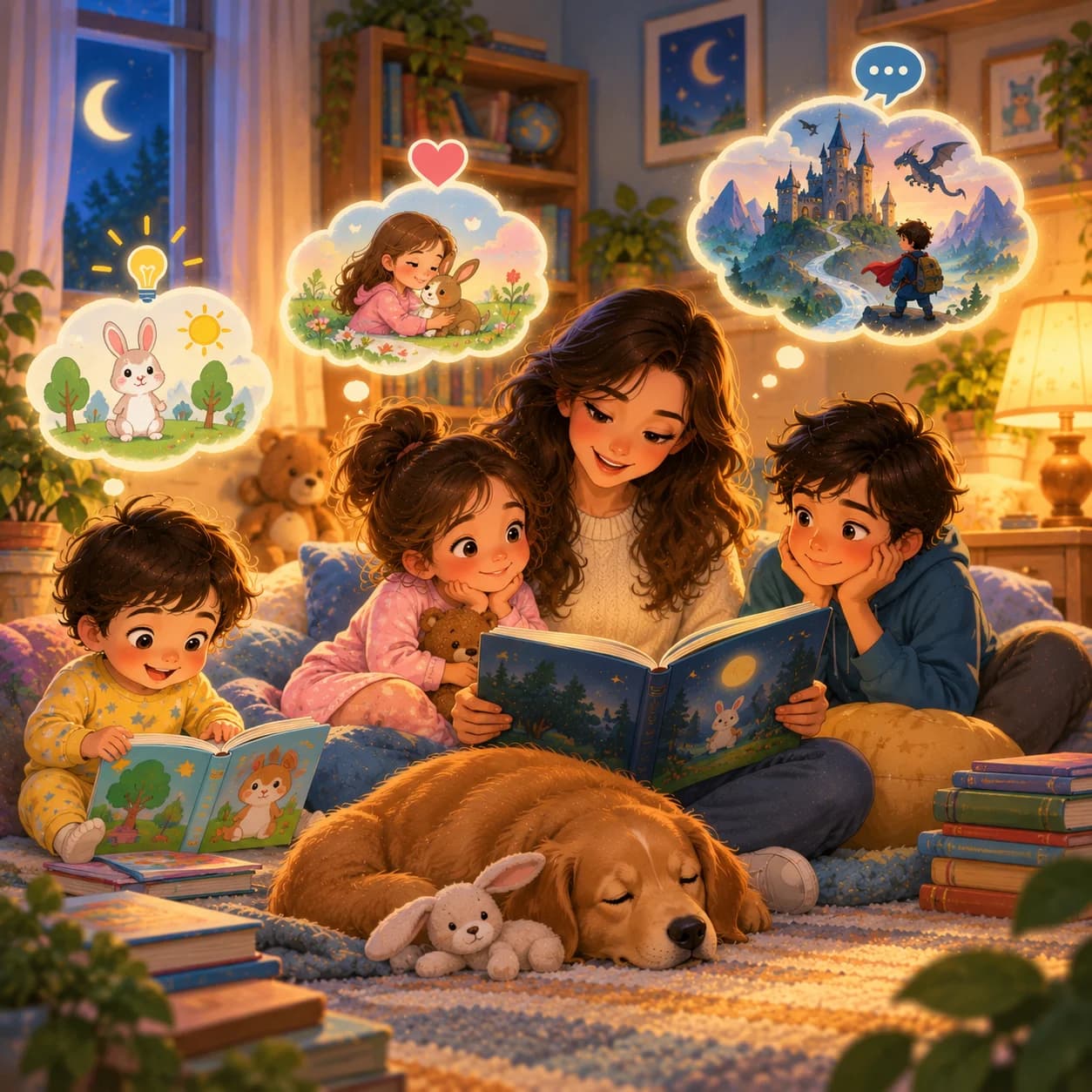
Why Age-Appropriate Stories Matter
The roadmap starts with the why: what actually changes in a child from one age to the next. A story that misses a child's developmental stage can make reading feel like a chore, not a shared pleasure.
Attention span grows in predictable ranges, roughly two to three minutes per year of age. A two-year-old can hold a story for about four to six minutes, while a six-year-old can manage twelve to eighteen. That is a very different book. A gorgeous book can still be the wrong book.
We bought a beautifully illustrated story marketed for two-year-olds, but it ran well past the attention span a toddler can actually hold. By page five our child was squirming off the couch, and the book went back on the shelf. That mismatch is exactly what turns children bedtime stories into a nightly battle instead of a bonding ritual.
Emotional capacity changes too. Younger children need safe, contained feelings; older children can hold more complex emotional arcs. Language ability is the hidden gap. Picture books use richer vocabulary than everyday speech, and a 2015 brain-imaging study found that story listening activates regions for visual imagery and narrative comprehension. The 1985 Becoming a Nation of Readers report called reading aloud the single most important activity for building reading knowledge.
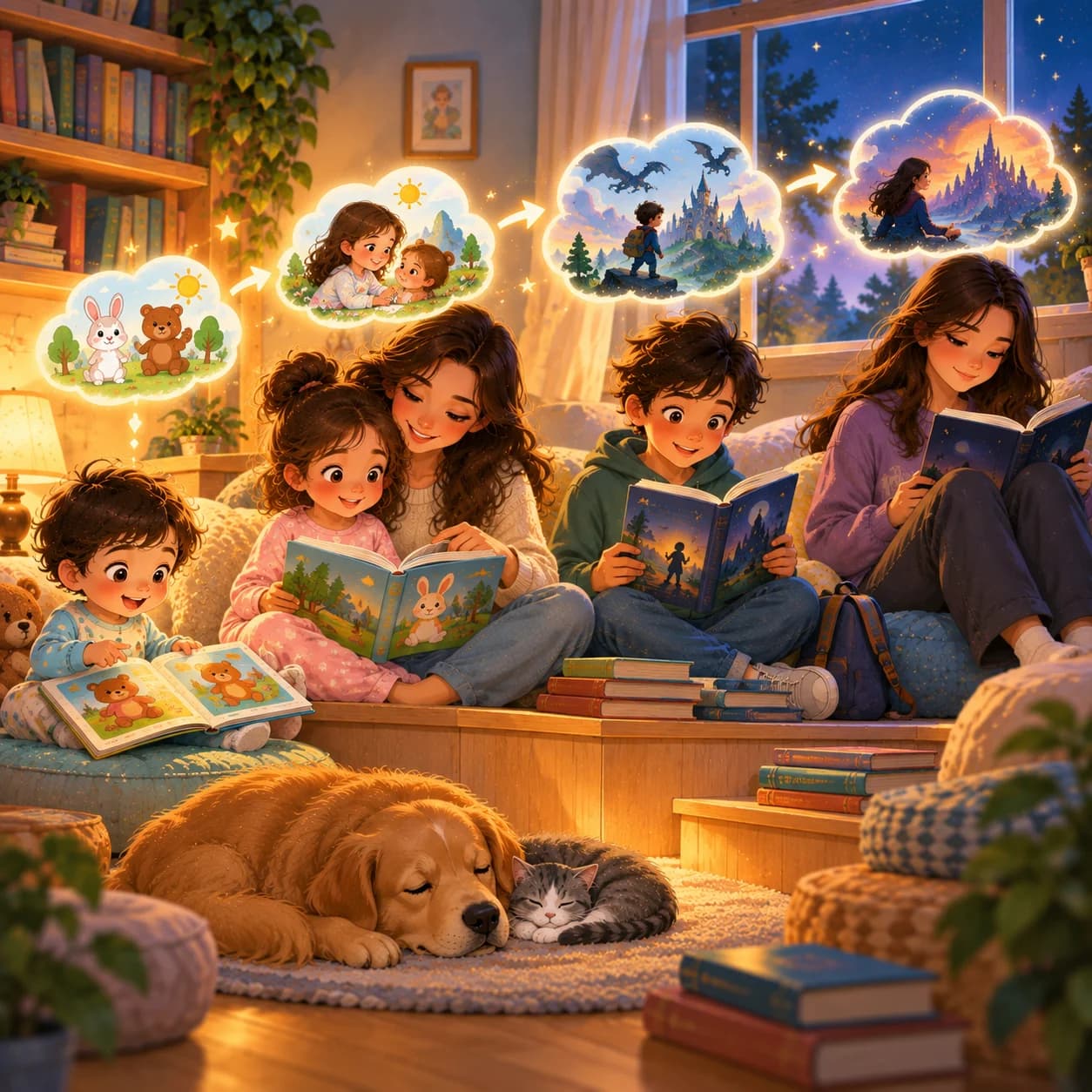
Reading by Age: The Complete Roadmap
Now the roadmap itself, stage by stage, from toddler to teen.
A useful scale I hand every parent: two to three minutes of attention per year of age. A five-year-old holds about ten to fifteen minutes, a ten-year-old twenty to thirty, and by the mid-teens thirty to forty is realistic. That scale shapes every book I recommend.
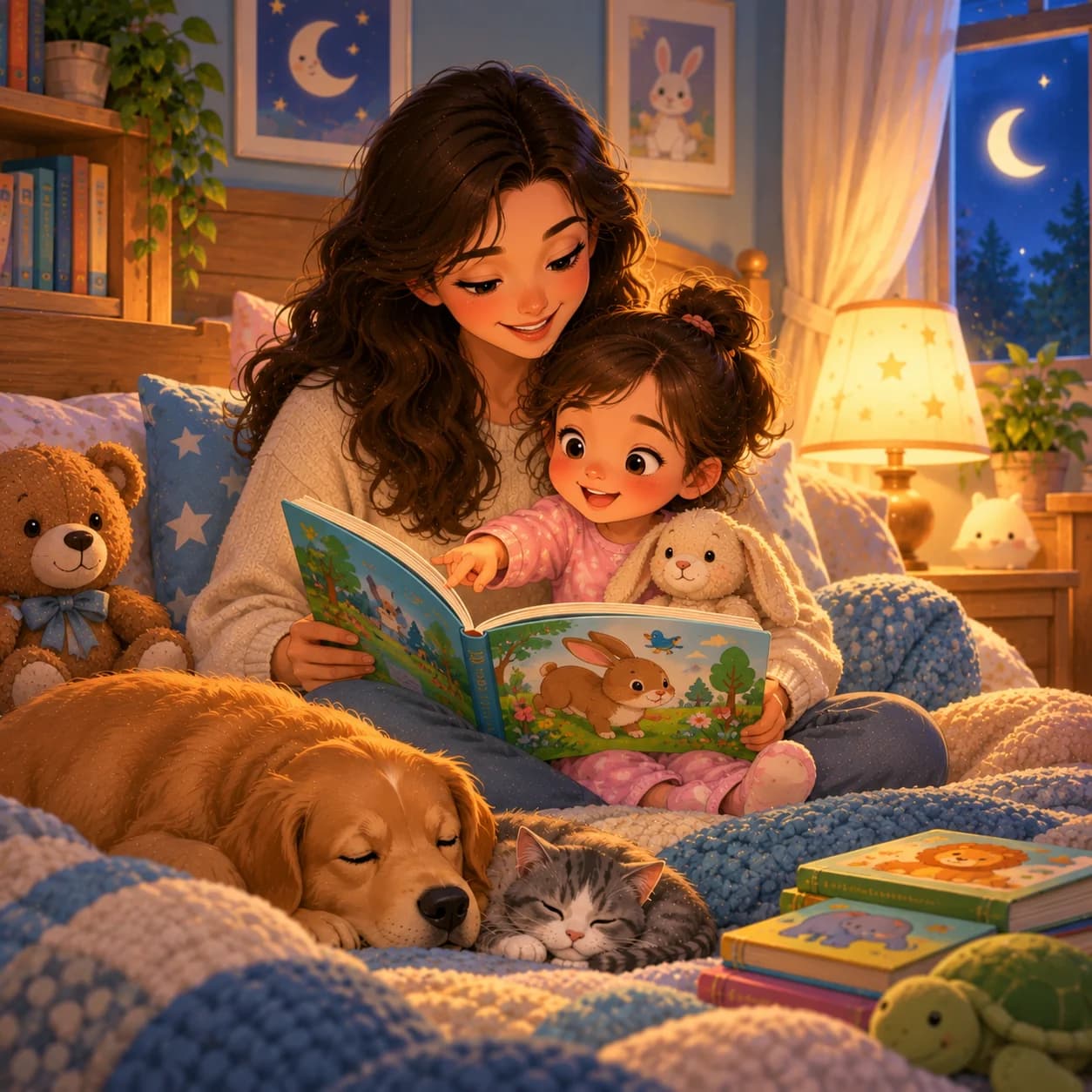
Ages 1 to 5: Toddlers and Preschoolers
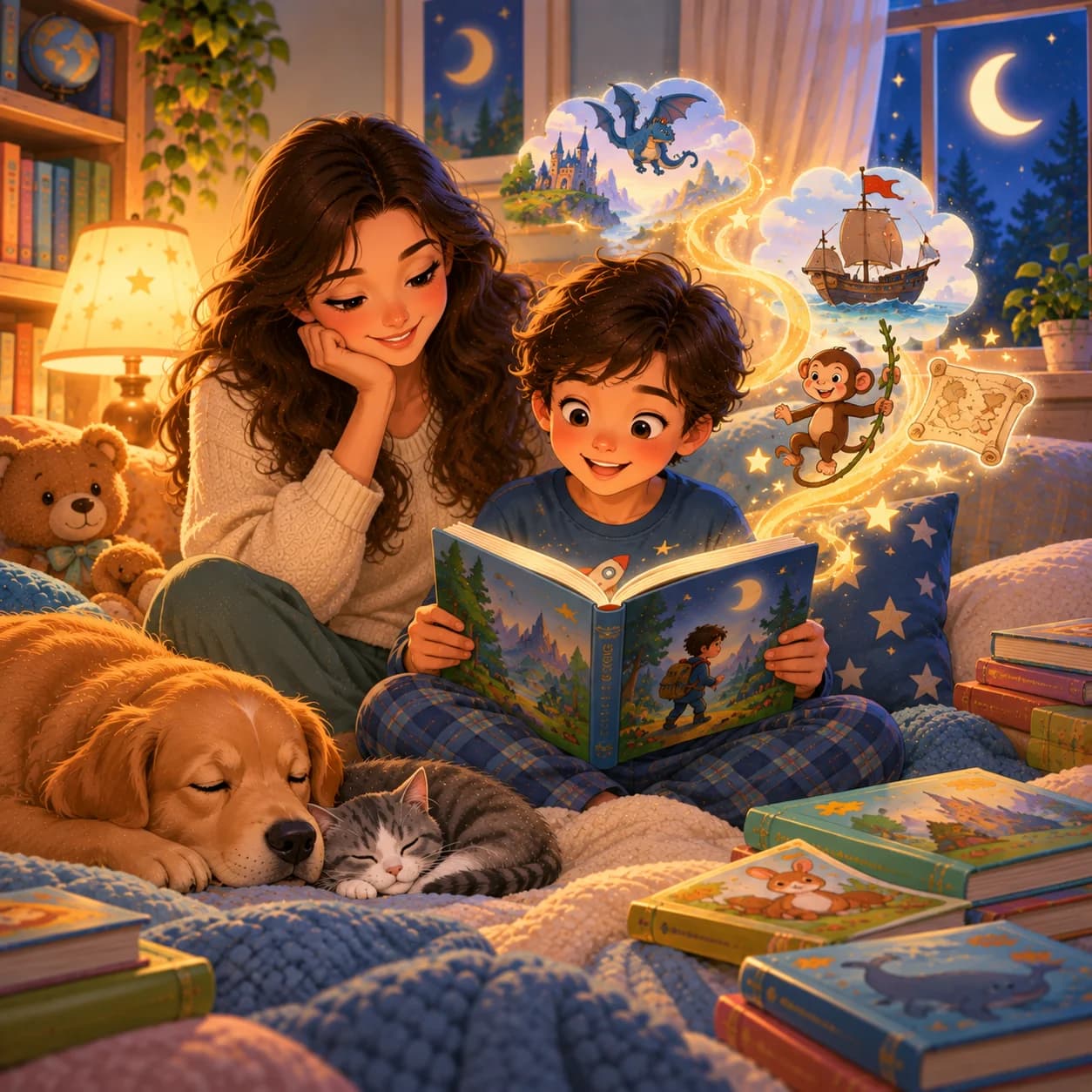
Toddler story time is short, repetitive, and physical. The child sits close, points at pictures, asks for the same book again the moment it ends.
At this stage, the story matters less than the experience of being read to: the voice, the lap, the rhythm. Look for short sentences, one simple plot, animal or child protagonists, gentle themes, and a calm ending. These are the short bedtime stories for kids that actually work: brief enough to finish before their eyes droop, warm enough to make sleep feel safe.
Avoid anything too long, too scary, or too abstract. A good structure: a small problem, a simple journey, a happy return home. The kind of short stories for children that wrap up with a hug and a goodnight.
The youngest readers need short, safe, rhythmic tales, like the stories for toddlers we keep on hand.
Expert Tip
Ages 1-5: Toddlers asking for the same story every night is not a problem; it is how they build language and a sense of mastery. Let them repeat.
Ages 6 to 8: Early Readers
The big shift arrives here. Children begin reading independently, but listening comprehension still far outpaces reading ability. This is the golden age for reading aloud slightly above their level while offering simple books they can read themselves.
Longer plots work now: a clear beginning, middle, and end, distinct characters, gentle humor, first adventures and mysteries. Expect the "why" and "what happens next" questions. These are the readers who are ready for real stories for children with actual narrative arcs, not just naming games.
Avoid stories that are too babyish and ones that are too complex. Our collection of stories for early readers across ten genres fits this stage, from magical adventures to first mysteries. If you are looking for children stories to read together at this age, that is the sweet spot.
Expert Tip
Ages 6-8: Alternate reading aloud with having your child read a page or paragraph to you; this builds confidence without turning story time into a test.
Ages 9 to 12: Middle Grade
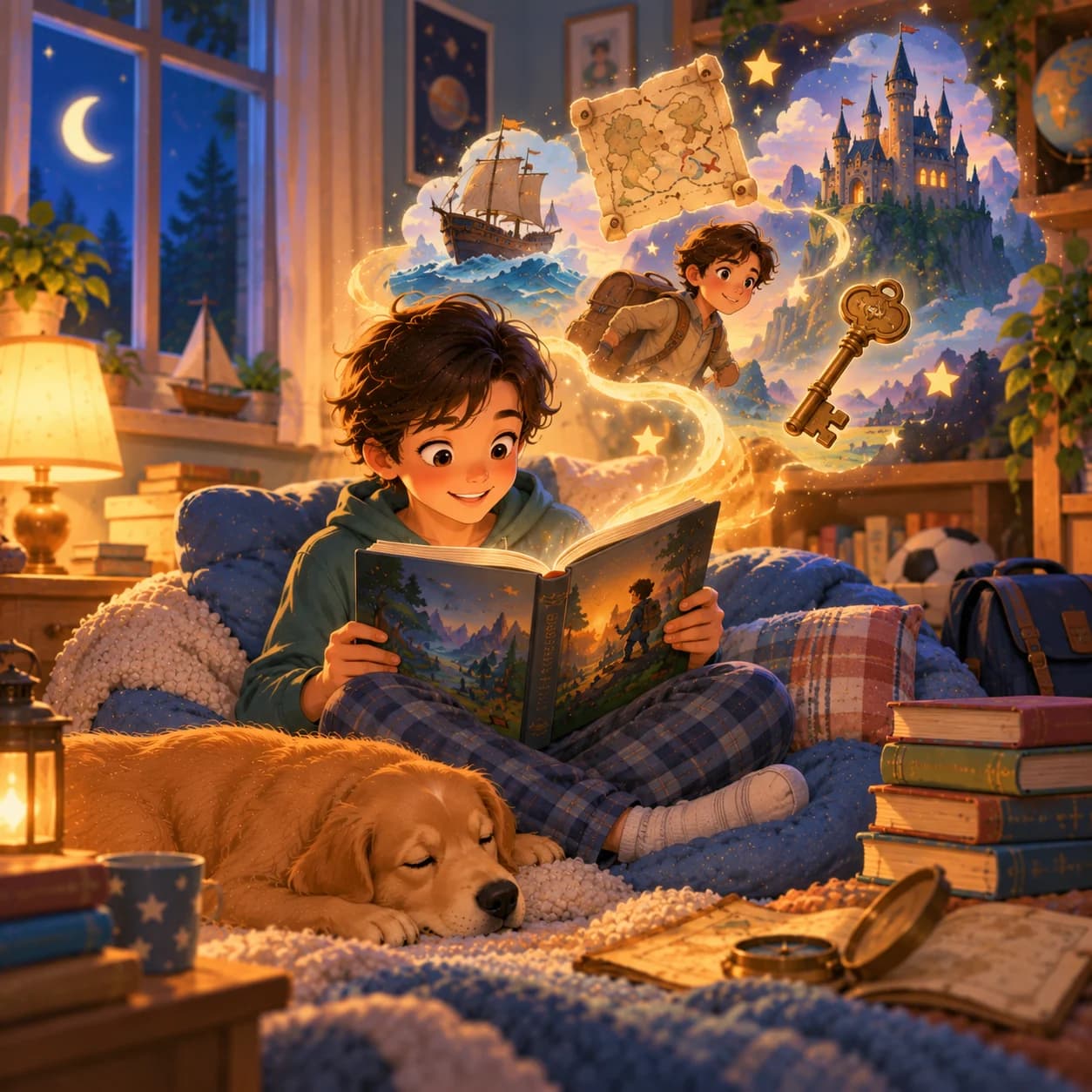
The middle grade reader is independent, opinionated, and hungry for bigger stakes and deeper mysteries, while still needing a safe landing. Multi-chapter plots, puzzles, treasure hunts, heroes facing real challenges, humor, and first moral complexity all land here. Reading becomes about identity as much as plot.
Our middle grade stories with thrilling rides and thinking puzzles match this hunger. These are the stories for kids that hold up to rereading and spark real conversation. Avoid talking down, too-easy resolutions, and emotionally premature themes. Let the child choose.
Expert Tip
Ages 9-12: Keep read-aloud time; reading a chapter a night together and discussing it builds comprehension far more than silent reading alone.

Ages 12 to 15 and Teens
Teens are the hardest audience, and many have stopped reading for pleasure. The goal is not to force reading but to offer stories that respect their intelligence, question the world, and reflect real-life complexity. Thrillers, sci-fi, romance, and historical fiction with real stakes, flawed characters, and untidy endings all fit.
Teens read to understand themselves and the world. The right bedtime stories for children at this stage look nothing like the ones they grew up with, and that is the point. Avoid preachy, sanitized, or younger-aimed material. Our stories for teens can reignite a lifelong habit.
And here is something worth saying out loud: bedtime stories for adults are a real thing too. If reading to your teen brings back your own love of a good story before sleep, lean into that. Parents who rediscover reading alongside their kids model exactly the habit they want to build.
Expert Tip
Ages 12-15 and Teens: If a teen has stopped reading, offer short stories, graphic narratives, or genre fiction in a subject they already love; the entry point matters more than literary merit.
Age is the backbone, but genre, format, and occasion shape the choice too.
Beyond Age: Genre, Format, and Occasion
Age sets the stage, but occasion, format, and curiosity shape the daily choice.
Holiday and Seasonal Stories
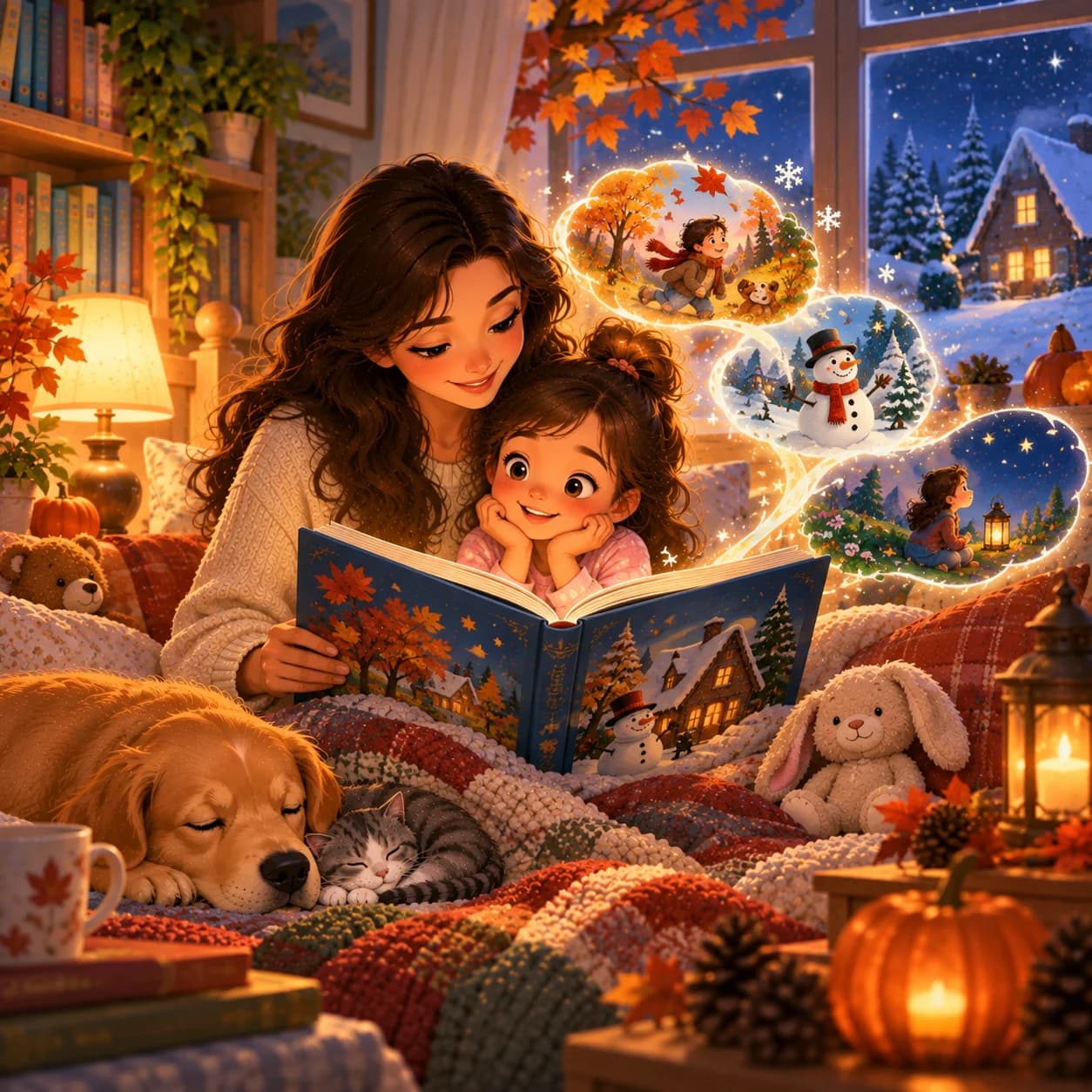
A Christmas story in December, a spooky tale in October, a New Year's story in January: occasion-based reading gives a child a concrete reason to look forward to story time. Seasonal stories connect reading to real events and build family traditions.
Three hundred nights a year, give or take, and the October stack is still the one my daughter reaches for first: a pumpkin story for the plot, a fact book for the why. Last Halloween she insisted on the same witch story four nights running, and by the fourth night she was "reading" it to her stuffed animals in character voices. That is what seasonal bed time stories for kids can do when they land right. The full collection of holiday and seasonal stories spans Christmas to New Year's and beyond.
Poems and Rhymes
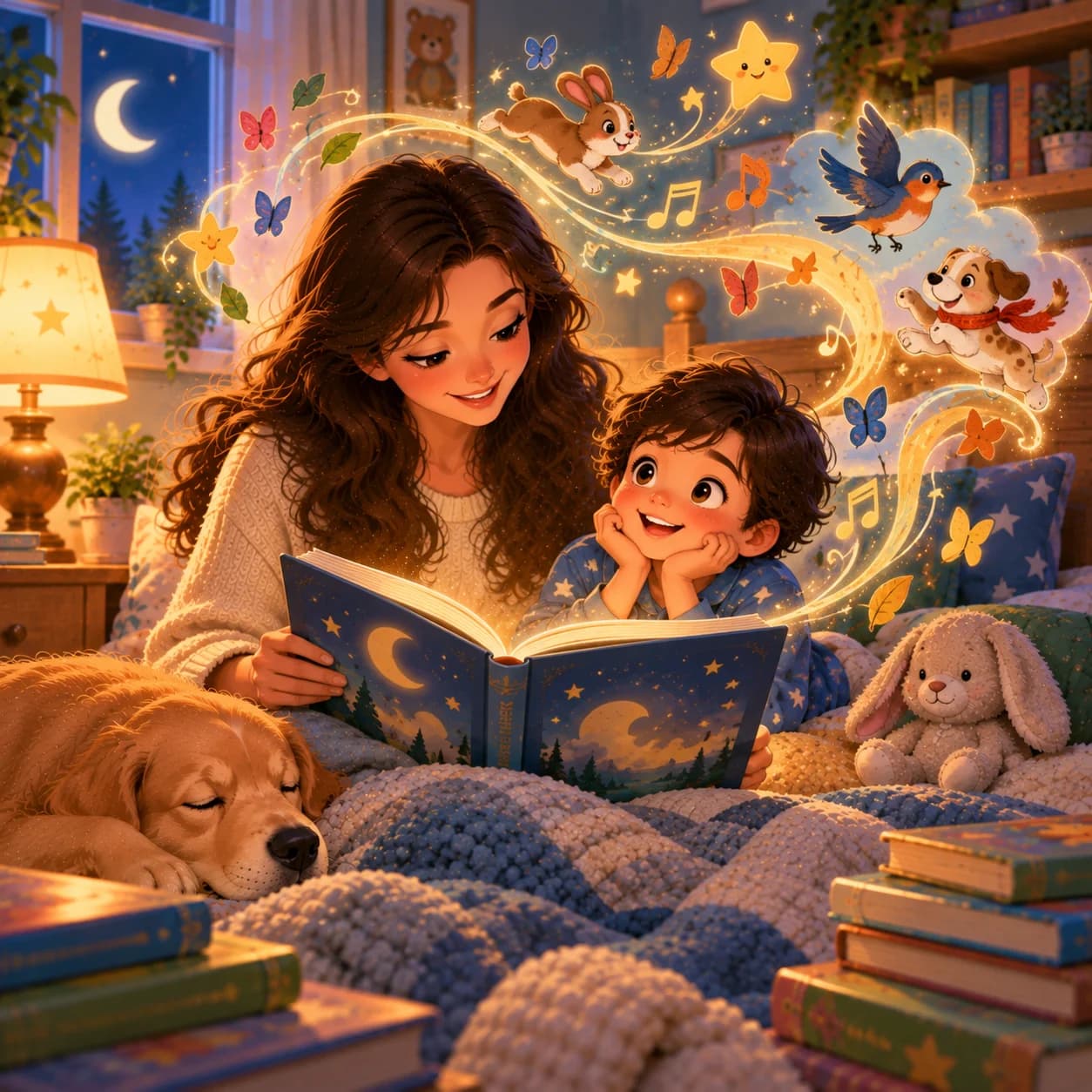
Poems are a different tool with their own strengths. Rhythm, rhyme, and repetition build phonological awareness, the sound-level skill that underpins later reading. Younger children and reluctant readers respond well to poems. They are short, read well aloud, and deliver a complete emotional experience in a few lines.
A mother once told me her five-year-old would not sit still for any picture book, but he would listen to a rhyming poem three times in a row and then try to make up his own ending. That child did not dislike stories; he needed the rhythm to anchor his attention. Some of the best short bedtime stories are not stories at all but poems that wrap a whole feeling into four lines. Our poems and rhymes collection covers fun rhymes, calming lullabies, and nature poems.
Expert Tip
Read a poem aloud twice. Once for the sound, once for the meaning. Children hear the music first and the message second, and both build phonological awareness.

Little Blogs for Curious Minds
Not all reading is fiction. Curious children, especially ages six to twelve, often prefer real information. Non-fiction feeds a different curiosity and builds background knowledge, which supports comprehension across all reading.
My nephew went through a phase where he would reject every storybook I offered but would sit for twenty minutes reading about how volcanoes work. I stopped fighting it and started mixing fact time with story time. Within a month, he was picking up fiction on his own because the non-fiction had built enough vocabulary to make stories easier. It hooks children who find short stories boring. Let the child's questions lead. Our kid-friendly blogs offer educational, entertaining content for curious minds.
Research consistently links a regular read-aloud routine, whatever the format, to positive developmental outcomes in young children. Knowing what to read is half the job. Making it a habit is the other half.
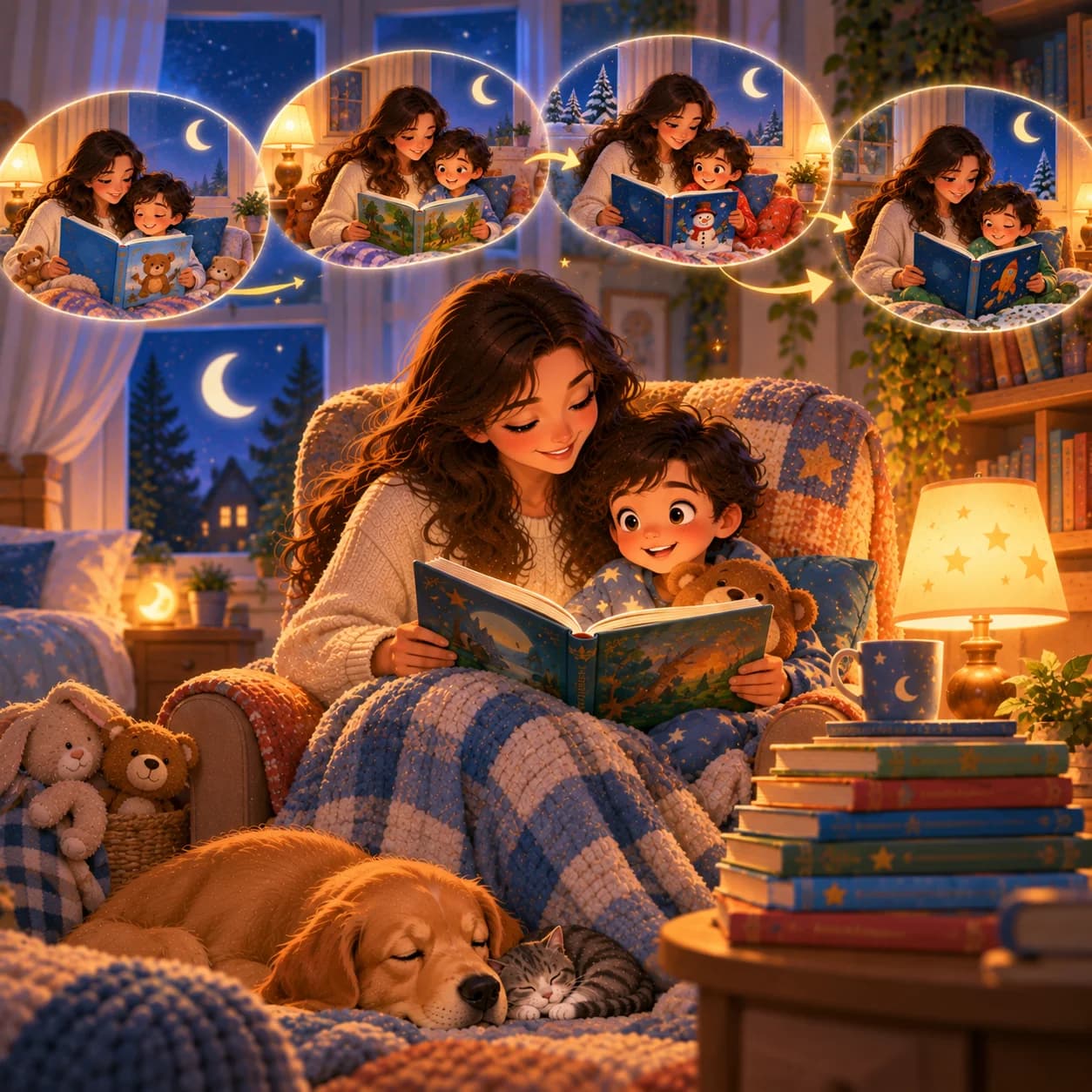
Building a Reading Routine That Sticks
The right book only works if it is actually read. The routine matters more than the title.
Pick a time and place and keep them. A child's brain learns to expect the story when the setting never changes: same chair, same lamp, same fifteen minutes. A 2025 review of home read-alouds links that regularity to positive developmental outcomes, but the practical payoff is simpler. The child stops resisting and starts arriving.
The blocks kept stacking while I read. Page three, page five, page eight, the tower grew and my voice went on, and I was sure nothing was landing. Then, two days later, she said the bear's line back to me at breakfast. Listening had happened without sitting still.
Let the child choose sometimes, even the same book for the tenth night. Choice builds ownership and keeps reading from feeling like a test. That is the heart of most parenting tips for reading: small, repeatable choices that make the evening feel like the child's own.
You do not need to buy a new book every week, either. There are plenty of free stories for children available through your local library and online, and a growing number of sites now offer a full library of short stories organized by age and genre. What matters is not the price tag but the consistency.
For parents who read alongside their children at night, it is worth knowing that bedtime stories for adults to fall asleep free content has grown enormously in recent years: calm, slow-paced narrations designed to help grown-ups wind down. The whole household reading before bed, each at their own level, is one of the most effective routines I have seen families build.
Expert Tip
If you miss a night, don't double up to compensate. Just start again the next ordinary evening.

Common Mistakes Parents Make When Choosing Stories
Most parents make the same handful of mistakes, and they are all fixable. None of them come from a lack of love. They come from not knowing what is actually changing in a child's attention span, emotional world, and language ability at each age. Once you see the pattern, the fixes are small.
Nostalgia Over Stage
A parent's favorite childhood stories often miss the child's current developmental stage. The story that enchanted you at seven may demand a listening comprehension level, a patience for slow openings, or a tolerance for old-fashioned vocabulary that your four-year-old simply does not have yet. It is just early for this child.
Check fit by reading the first page aloud and watching the child's face. If their eyes wander before the second paragraph, the book is for later. Put it back on the shelf without ceremony. It will still be there when the child is ready, and it will land better then.
Pushing Too Far, Too Fast
Pushing a child above their level creates frustration, not progress. A child who is constantly meeting words they cannot follow, plots they cannot hold, or emotional stakes they cannot process learns one lesson: reading is hard and I am bad at it.
That lesson sticks.
Step back to the right level and let the child feel competent. A book that is slightly easy builds the confidence that makes the next step possible. The goal is to keep the child wanting to come back.
Stopping Read-Alouds Too Soon
Many parents stop reading aloud the moment a child can read alone. That is the single most common mistake I see, and it costs more than parents realize. Listening comprehension stays ahead of reading ability well into the early teens. A nine-year-old who reads simple chapter books alone can still follow, and love, a much richer story read aloud.
Keep read-aloud time going. Children meet vocabulary, sentence structures, and ideas they cannot yet decode on their own. They also learn that stories are worth sharing, not just finishing. Whether you are reading from a physical book or pulling up online stories on a tablet, the shared experience is what counts.
Turning Reading Into a Test
Quizzing a child after every page turns reading into a chore. When every story ends with "What happened?" or "What do you think that word means?", the child learns that reading is a performance, not a pleasure. They start bracing for the question instead of sinking into the story.
Keep it enjoyable by letting the child talk when they want to, not when you ask. If they point at a picture or laugh at a line, follow that. When they sit quietly, let them. The understanding is happening whether or not they prove it to you.
Ignoring the Child's Interests
A child's own interests are a better guide than any "good" book list. A list tells you what other people value. Your child's obsession with trucks, or dinosaurs, or a particular cartoon character, tells you what will actually hold their attention. That is the book that gets read twice in a row, and that repetition is doing real work. This is true whether you are browsing a bookstore or scrolling through free bedtime stories for kids online.
Honor the interest without apologizing for it. If the child wants the same construction-vehicle book for the fifth night, read it with the same energy as the first. They are building mastery, and mastery feels good.
Last spring, a parent asked me why her son would only read books about garbage trucks. She had tried the award winners, the classics, the lists. Nothing took. I told her to stop fighting the garbage trucks and lean in. She came back two weeks later and said he had started pointing at the word "compactor" and asking what it meant. The interest was the door.
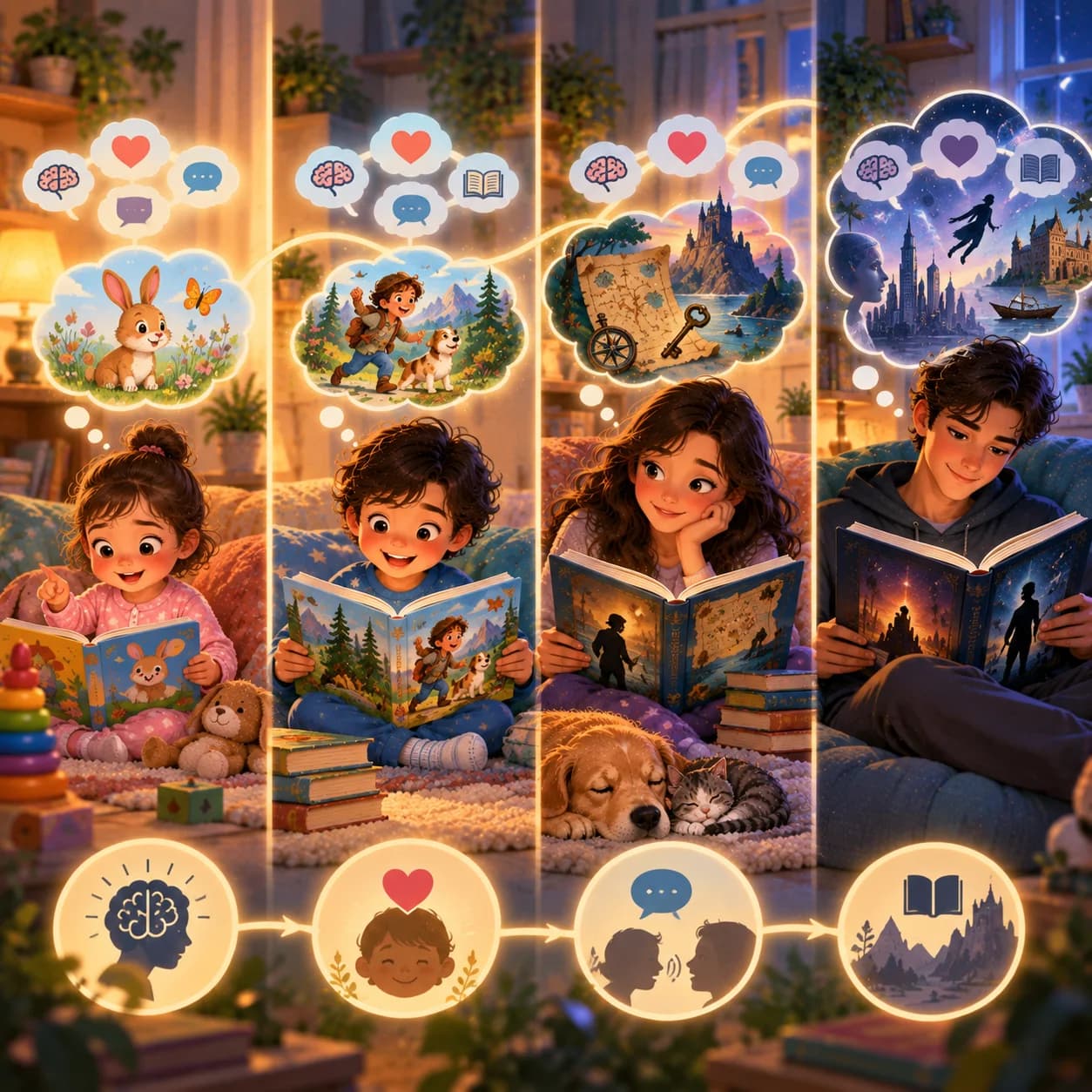
Table: What Changes at Each Reading Stage
The whole journey, in one table.
| Age Range | Attention Span | Emotional Needs | Language Level | Best Story Types |
|---|---|---|---|---|
| 1-5 | 4-6 minutes (typical) | Comfort, routine, naming simple feelings | Single words to short sentences; rhymes and repetition | Board books, nursery rhymes, repetitive picture books |
| 6-8 | 12-18 minutes (typical) | Fairness, belonging, handling frustration | Full sentences, growing vocabulary, early sound play | Picture books with real plots, early chapter books read aloud |
| 9-12 | 20-30 minutes (typical) | Identity, friendship, justice, independence | Chapter-length listening, figurative language | Middle grade novels, series, nonfiction |
| 12-15+ | 30-40 minutes (typical) | Autonomy, moral complexity, belonging | Abstract ideas, inference, complex plots | Young adult, complex novels, classics, nonfiction |
Attention span varies by child and context; these are typical ranges, not fixed thresholds.

Genre Quick Guide by Age
Age sets the container; genre fills it. The stage table above shows what changes in attention, emotion, and language. This table shows which story type meets each stage where it actually is, not where a publisher's marketing says it should be.
A parent asked me for a fantasy book for her six-year-old who loved the movie version of a middle grade series. I handed it over without checking the reading level. Three pages in, the child's questions shifted from "what happens next" to "what does that word mean?" That shift is the tell I now watch for: when a child stops asking about plot and starts asking about vocabulary, the book is one stage too far.
The ranges below follow developmental stages, not marketing labels — this is the map to follow.
| Genre | Best Starting Age | Peak Range | Why It Works |
|---|---|---|---|
| Fantasy | 4 | 4-8 (gentle magic), 9-12 (world-building) | Safe wonder for young ones; complex lore for tweens who can hold a story world across chapters. |
| Science | 6 | 6-10 | Feeds the "why" stage; kids can hold factual explanations and are building background knowledge. |
| Mystery | 7 | 7-10 | Requires holding clues in working memory and following cause and effect; attention span now supports multi-chapter puzzles. |
| Realistic / Kids | 5 | 5-8 | Mirrors the child's own world of school and friendship, giving language to feelings they are learning to name. |
| History | 8 | 8-12 | Needs a sense of time and enough background to grasp "long ago" and connect it to now. |
| Romance | 10 | 10-12 | Tweens feel first crushes and need light stories that normalize those feelings without intensity. |
| Adventure | 6 | 6-10 | Fast pacing and a clear quest match developing attention spans; the structure is easy to follow. |
| Horror | 9 | 9-12 | Older kids enjoy safe scares; they can separate fiction from reality and enjoy the thrill. |
| Comedy | 4 | 4-8 | Wordplay and slapstick match phonological awareness and a developing sense of humor. |
Get the genre-stage match right and most reading struggles fade.
Conclusion
You now have the whole map. A month ago you might have stood before a wall of bedtime stories, unsure which one fit your child's age. Tonight you can walk to that same shelf and know exactly what you are looking for.
That is the whole shift: a clearer sense of what your child needs at this stage, and why. More books and better lists matter less than that.
Pick one story from the right age group. Read it together tonight. Ten minutes is enough.
After a decade of reading aloud in library storytimes, the parents who came back were never the ones with the biggest book pile; they were the ones who stopped second-guessing the shelf and just started reading.
Browse the age group that matches your child and start tonight.
FAQ
The questions parents actually ask, answered without jargon.
How long should we read each day?
Consistency matters more than a fixed number of minutes. Ten minutes most days beats an hour once a week.
When should I stop reading aloud?
There is no age to stop. Keep going as long as your child enjoys it. Listening comprehension stays ahead of reading ability into the early teens.
Is it a problem that my child wants the same book every night?
No. Repetition builds phonological awareness and confidence.
How do I know if a story is too advanced?
A story is too advanced only if your child cannot retell the gist. If they can tell you what happened, it is working.
My teen stopped reading. Can I win them back?
Try shared listening or graphic novels. Both count fully.
Do poems and non-fiction count?
Yes. Poems and non-fiction are read-aloud material, same as any story.
Pick one answer and try it tonight.
🌙 Start Reading Free Bedtime Stories Tonight
Choose a collection below and begin your bedtime story ritual tonight.