

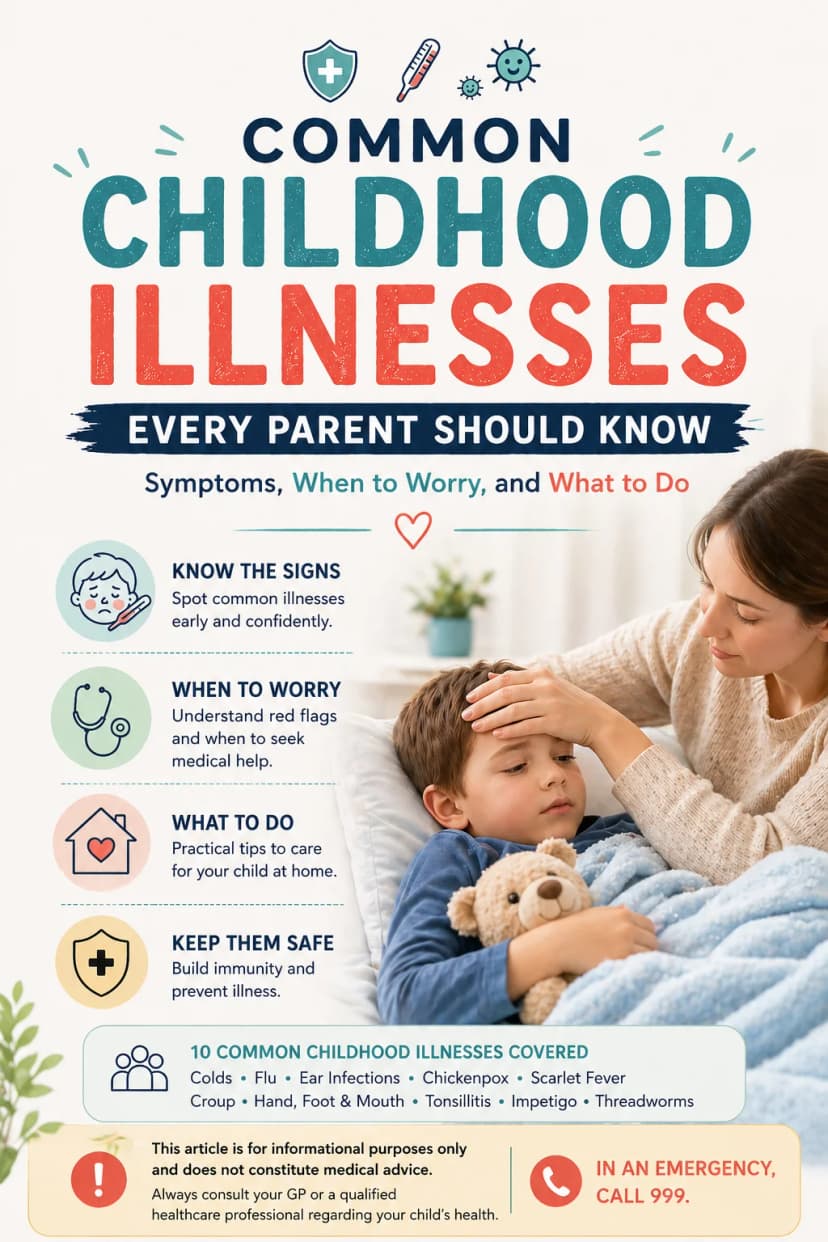
Common Childhood Illnesses Every Parent Should Know

Written by Nia Lark
Published
It is three in the morning and your child is burning up. Or they have woken covered in spots. Or a rash has appeared from nowhere and you are standing in the bathroom with your phone, trying to work out whether this is something that can wait until morning or something that cannot. Every parent knows this feeling, and most of them have been there more than once.
Children get ill frequently, particularly in the early years when their immune systems are encountering pathogens for the first time and building the antibody library that will protect them later. This is not a sign that something is wrong. It is the immune system doing exactly what it is supposed to do. But knowing which illness you are dealing with, what to expect, and when a symptom crosses the line from manageable to urgent, makes an enormous difference to how confidently and effectively you can respond.
This guide covers ten of the most common childhood illnesses, what they look like, how long they typically last, how to manage them at home, and the specific signs that mean it is time to seek medical attention. It is an informational reference, not a substitute for medical advice. If you are ever genuinely unsure about your child's symptoms, contact your GP, call NHS 111, or seek emergency care. No guide replaces a professional assessment of a sick child in front of you.
Ten Common Childhood Illnesses: What to Know and What to Watch For
The Common Cold
The common cold is caused by any of over two hundred different viruses, most commonly rhinoviruses, and is by some margin the illness children will experience most frequently. Young children average between six and eight colds per year, and in the first years of nursery or school attendance, this can feel like a near-constant state of sniffles.
Symptoms typically begin with a sore throat, runny nose, and sneezing, followed by congestion and a mild cough. A low-grade temperature is common in the first day or two. Symptoms usually peak around day two or three and resolve within seven to ten days, though a cough can linger for two to three weeks.
Colds are viral, which means antibiotics are not effective and are not appropriate. Home management focuses on comfort: fluids, rest, appropriate pain and fever relief as advised by a pharmacist, saline nasal drops for congested babies, and patience. Seek medical attention if your child develops a high fever that is not responding to medication, has ear pain, develops difficulty breathing, or their symptoms are significantly worsening after a week rather than improving.
Influenza (Flu)
Flu is frequently confused with a bad cold, but the two feel quite different. Flu tends to arrive suddenly and with more force. A child who is well at lunchtime can be significantly unwell by teatime. Key features that distinguish flu from a cold include a higher fever, often above 38.5 degrees Celsius, pronounced fatigue and muscle aches, headache, and a dry cough. The runny nose of a cold is usually less prominent.
Most healthy children recover from flu within seven to ten days with rest, fluids, and appropriate fever management. However, flu can cause serious complications including pneumonia, particularly in very young children, those with underlying health conditions, and immunocompromised children. The annual flu vaccine is available free on the NHS for all children aged two to seventeen and is worth taking up. Seek medical attention promptly if your child has a high fever lasting more than four to five days, develops difficulty breathing, has a rash, or seems unusually unwell or difficult to rouse.
Ear Infections (Otitis Media)
Ear infections are among the most common reasons parents bring young children to the GP. They most often follow a cold, when bacteria or viruses from the upper respiratory tract travel to the middle ear via the Eustachian tube, which is shorter and more horizontal in young children than in adults, making the journey easier.
Signs include ear pain, which in babies and toddlers may manifest as tugging or batting at the ear, unusual irritability, difficulty sleeping, and sometimes fever. Older children can usually tell you their ear hurts. Some ear infections also cause temporary hearing difficulty as fluid builds up behind the eardrum.
Many ear infections resolve without antibiotics within two to three days, and current guidance in the UK is that a watchful waiting approach is appropriate for most mild to moderate cases in children over two. However, antibiotics are more likely to be recommended for children under two, those with severe pain or high fever, or those whose symptoms are not improving after a few days. See your GP if you suspect an ear infection in a child under six months, if symptoms are severe, or if the child shows no improvement after a couple of days.
Chickenpox (Varicella)
Chickenpox is one of the most recognisable childhood illnesses: a distinctive rash that begins as red spots, progresses to fluid-filled blisters, and then crusts over. The rash typically starts on the chest, back, or face before spreading across the body, and can also appear inside the mouth, on the eyelids, and in the genital area. It is accompanied by fever, fatigue, and the intense itching that makes it particularly miserable for children.
Chickenpox is highly contagious from about two days before the rash appears until all blisters have crusted over, which typically takes five to seven days. The illness itself usually runs its course within one to two weeks. Home management includes cool baths, loose clothing, antihistamine syrup to ease itching as advised by a pharmacist, and keeping nails short to minimise scratch damage and secondary infection risk.
Important: do not give ibuprofen to a child with chickenpox, as it has been associated with increased risk of serious skin infections in this context. Seek urgent medical attention if your child develops difficulty breathing, a rash that looks infected or rapidly spreading, severe headache or sensitivity to light, or if they are immunocompromised. Adults who have not had chickenpox and pregnant women who are exposed should also seek prompt medical advice.
Hand, Foot and Mouth Disease
Hand, foot and mouth disease is a common viral infection in young children, most often caused by coxsackievirus. Despite its alarming name, it is generally mild and self-limiting. It is characterised by mouth ulcers and a rash of small blisters or spots on the palms of the hands, soles of the feet, and sometimes the buttocks and legs. A fever typically precedes the rash by a day or two.
The mouth ulcers can make eating and drinking painful, and ensuring the child stays well hydrated is the primary home management priority. Cold foods such as yoghurt, ice lollies, and cold milk can ease discomfort. The illness usually resolves within seven to ten days without medical treatment. Seek medical attention if your child cannot swallow fluids, shows signs of dehydration including dry mouth, no tears when crying, or significantly reduced wet nappies, or if symptoms are unusually severe or prolonged.
Croup
Croup is a viral infection that causes swelling of the larynx and trachea, producing the distinctive barking cough that parents who have encountered it describe as unmistakable: a harsh, seal-like bark that can be alarming to hear for the first time, particularly in the middle of the night when croup symptoms tend to worsen. It is most common in children between six months and three years.
Mild croup can often be managed at home. Keeping the child calm is important because crying and distress worsen the airway narrowing. Sitting upright, gentle reassurance, and cool night air, either from an open window or a short time outside, can help ease the symptoms. There is no strong evidence for the steam treatment that was previously recommended.
Seek urgent medical attention, including calling 999, if your child develops stridor at rest, which is a high-pitched noise when breathing in without crying, appears to be working very hard to breathe with visible use of the neck and chest muscles, has blue or pale lips or fingernails, or seems unusually distressed or difficult to settle. These are signs of significant airway obstruction requiring emergency assessment.
Scarlet Fever
Scarlet fever is caused by group A streptococcus bacteria and has seen a resurgence in recent years. It typically begins with a sore throat, fever, and headache, followed within a day or two by a distinctive rash that feels like sandpaper to the touch and appears first on the chest and abdomen before spreading. A flushed face with a pale area around the mouth, and a strawberry tongue, a red, bumpy tongue, are also characteristic features.
Unlike viral illnesses, scarlet fever is bacterial and is treated with a course of antibiotics, usually penicillin. It is important to see a GP promptly if you suspect scarlet fever, both to confirm the diagnosis and to begin treatment. With antibiotics, children usually begin to feel better within a few days, though the full course must be completed. Scarlet fever is notifiable in some settings, including schools, which should be informed if a child is diagnosed.
Conjunctivitis (Pink Eye)
Conjunctivitis is an inflammation of the conjunctiva, the thin membrane covering the white of the eye and the inside of the eyelid. In children it is most commonly either viral, occurring alongside a cold, or bacterial, characterised by a yellow or green discharge that causes the eyelids to stick together, particularly after sleep.
Viral conjunctivitis is self-limiting and resolves without treatment, usually within one to two weeks. Bacterial conjunctivitis may be treated with antibiotic eye drops prescribed by a GP, though mild cases in older children often clear without them. Cleaning the eye gently with cooled boiled water and a clean cotton pad, wiping from the inner corner outward, helps manage discharge. Conjunctivitis is contagious, and thorough handwashing is important to prevent spread within the household. See a GP if your child is under one month old with any eye discharge, or if symptoms are severe, worsening, or accompanied by eye pain or significant swelling.
Gastroenteritis (Stomach Bug)
Gastroenteritis, commonly called a stomach bug, is characterised by sudden onset vomiting and diarrhoea, often accompanied by cramping and sometimes fever. It is usually caused by a viral infection, most commonly norovirus or rotavirus, though bacterial causes including salmonella and campylobacter also occur. Most cases are self-limiting and resolve within a few days.
The primary concern in children with gastroenteritis is dehydration, which can develop quickly in young children, particularly infants. Signs of dehydration include a dry mouth, crying without tears, a sunken fontanelle in babies, significantly reduced wet nappies or trips to the toilet, dark urine, and unusual drowsiness or limpness. Oral rehydration solutions, available from pharmacies, are the most effective way to replace fluid and electrolyte losses and should be the first choice over plain water in children with significant vomiting or diarrhoea.
Seek medical attention promptly if your child is under three months with any vomiting, under one year old with signs of dehydration, has bloody diarrhoea, has a fever above 38 degrees in a baby under three months or above 39 degrees in a baby three to six months, or if symptoms are not improving after forty-eight hours in an older child.
Impetigo
Impetigo is a common and contagious bacterial skin infection that most often affects young children. It typically presents as red sores, usually around the nose and mouth, which quickly rupture and ooze fluid before forming a characteristic honey-coloured crust. It can also appear as fluid-filled blisters in a less common form called bullous impetigo.
Impetigo requires antibiotic treatment, which may be in the form of antibiotic cream for mild localised cases or oral antibiotics for more widespread infection. A GP assessment is needed to confirm the diagnosis and prescribe appropriate treatment. Children with impetigo should stay away from school or nursery until the sores have crusted over, or for forty-eight hours after antibiotic treatment has started. Towels, flannels, and bedding should not be shared, and thorough handwashing is important.
Warning Signs That Always Need Urgent Medical Attention
Regardless of which illness your child appears to have, certain symptoms always warrant immediate medical assessment. These are not situations for watchful waiting or calling NHS 111 first. Call 999 or go directly to A&E.
Difficulty breathing, including fast breathing, noisy breathing when not crying, or visible effort to breathe with the ribs or neck muscles working, is always urgent. A rash that does not fade when pressed with a glass, known as the tumbler test, can be a sign of meningococcal disease and is a medical emergency. Extreme drowsiness or unusual difficulty waking. A seizure, even if brief. A very high temperature in a baby under three months. A child who is pale, cold, and mottled with a weak or high-pitched cry. Any symptom that your parental instinct tells you is seriously wrong, even if you cannot put your finger on exactly why.
Parental instinct is not a thing to be dismissed. Research consistently shows that parents are often right when they sense something is seriously wrong with their child, even before specific warning signs are fully apparent. If you feel something is not right, seek assessment. It is always better to be reassured by a professional than to wait on something that turns out to have needed urgent attention.
When to Call 111, See Your GP, or Go to A&E
NHS 111 is the right starting point when your child is unwell and you are unsure whether they need to be seen, when your GP is closed, or when you want guidance on symptoms that are not clearly emergency-level but feel beyond what you can confidently manage at home. The 111 service can triage your child's symptoms, advise on appropriate care, and book appointments or direct you to the right service.
Your GP is the right choice for illness that needs assessment and possible prescription treatment but is not an emergency: a rash you want looked at, an ear infection that is not resolving, conjunctivitis that needs antibiotic drops, or any illness in a young baby where you want professional reassurance. Many GP surgeries also offer same-day urgent appointments for sick children, which are worth asking about.
A&E is for genuine emergencies: the warning signs listed above, injuries, and anything where you believe your child needs immediate assessment and treatment. If you are in any doubt about whether a situation is an emergency, call 999 or go to A&E. Erring on the side of caution with a child's health is always appropriate.
Building a Useful Home Medicine Cabinet
Having the right things to hand before illness strikes means you are not trying to source supplies at midnight with a sick child. A well-stocked family medicine cabinet typically includes age-appropriate paracetamol and ibuprofen, noting that ibuprofen is not suitable for children under three months, children with certain health conditions, or for use during chickenpox. It also includes oral rehydration sachets, a digital thermometer, saline nasal drops for young babies, antihistamine syrup, a selection of plasters and basic wound dressings, and a note of your GP surgery's out-of-hours number and NHS 111.
Always follow the dosage instructions on the packaging for any medication and check that the product is age-appropriate for your child. If you are unsure, a pharmacist can advise on appropriate products and doses without an appointment and is an underused and extremely useful resource for parents managing common childhood illnesses.
Frequently Asked Questions
My child is always sick. Is something wrong with their immune system?
Frequent illness in young children, particularly in the first years of nursery or school, is the immune system doing its job rather than failing at it. Each infection prompts the development of specific antibodies, building the immune memory that will protect the child more effectively as they get older. Most children who seem constantly ill in early childhood experience a notable reduction in frequency of illness by the time they are six or seven, as their immune library grows. If your child is experiencing unusually severe infections, infections that do not resolve normally, or infections in unusual locations, speak to your GP about whether further investigation is warranted.
Should I keep my child home from school when they are ill?
The general principle is that a child with a fever should stay home until they have been fever-free for at least twenty-four hours without the use of fever-reducing medication. Children with vomiting and diarrhoea should remain home for forty-eight hours after the last episode. For specific contagious illnesses including chickenpox, impetigo, and scarlet fever, there are specific exclusion guidelines that your school or nursery can advise on. When in doubt, keeping a sick child home is both considerate to other families and usually better for the child's own recovery.
How do I bring down a fever safely?
Fever is a normal and healthy immune response and does not always need to be treated. In a well child who is drinking normally and is not unusually distressed, a mild fever can be monitored rather than immediately medicated. When a fever is causing significant discomfort, age-appropriate paracetamol or ibuprofen, used according to the packaging instructions for your child's weight and age, is the appropriate treatment. Sponging with cool water is no longer recommended. Ensure the child stays well hydrated and does not overheat. See a GP or call 111 if you are concerned about a fever's height, duration, or the child's overall condition regardless of the temperature reading.
Are antibiotics useful for viral illnesses?
No, and they should not be used for them. Antibiotics are only effective against bacteria. Viral illnesses, which include colds, flu, most sore throats, most ear infections in children over two, hand foot and mouth disease, and chickenpox, do not respond to antibiotics. Using antibiotics unnecessarily contributes to antimicrobial resistance, which is one of the most serious public health challenges globally, and can also disrupt a child's gut microbiome and cause side effects without any therapeutic benefit. If your child has a viral illness, the appropriate treatment is supportive care: rest, fluids, and symptom relief where needed.
The Bottom Line
Childhood illness is unavoidable, but navigating it does not have to feel overwhelming. Knowing what common illnesses look like, how long they typically last, and what the genuine warning signs are transforms three-in-the-morning uncertainty into something more manageable. Most childhood illnesses, most of the time, resolve with rest, fluids, comfort, and patience.
Keep your home cabinet stocked. Know your GP surgery's out-of-hours options. Save NHS 111 in your phone. And trust the instinct that tells you when something feels more serious than the usual run of childhood bugs, because that instinct is worth acting on every time.
Your child will be ill many times in their childhood. Each time, their immune system learns something. And each time, so do you.